In June 2025, the Belgian investigative programme VRT News opened up the mastheads of Elle and Marie Claire's Belgian editions and found nobody was home. Ventures Media, which publishes both titles along with Forbes Belgium, had spent months running AI-generated articles under invented journalist personas — bylines with no verifiable presence anywhere online, no contact details, and, in Marie Claire's case, a single fictional writer credited with nearly half of the year's output. Her name was Claire De Wilde. She did not exist. Elle's Belgian edition wasn't much better: two invented bylines accounted for more than half its content. When VRT asked about it, an executive called it a test of "the possibilities of automation" and admitted, more plainly: "We are generating articles that are entirely created by AI."
That same month, a different, uglier version of the same accusation showed up in a courtroom, aimed at pictures instead of prose. Disney and Universal sued the AI image generator Midjourney, and their lawyers didn't reach for a careful legal phrase. They called the company "a bottomless pit of plagiarism". The complaint came with receipts — Darth Vader, Yoda, Buzz Lightyear, all generated on request, all recognisable on sight. Two of the most protective studios on earth said, in a filing, what everyone else had been circling: this isn't inspiration, this is theft.
The machine wasn't retrieving a file and handing back a copy. It was generating something new — assembled on the spot — that nonetheless arrived unmistakably derived from a body of work it had no right to learn from. New object, old source, no daylight between them. That's a strange kind of theft. It's also, if you keep looking, a strange kind of creation.
The quieter, more pervasive version doesn't even need a scandal. Spend five minutes in any conversation about "AI slop" and you'll hear the same complaint: the LinkedIn posts that read like nobody wrote them, the shelves of self-published books that appear in bulk and vanish within a week, the stock-image libraries quietly filling with pictures nobody looked at twice before uploading. Nothing here was stolen the way Disney would describe it, or faked the way Elle and Marie Claire's bylines were. It was just made — existing material, recombined, and shipped without anyone deciding whether it was any good.
That's the part that should worry us. It isn't new. It has just always been slower until now.
Four hundred years ago, a glover's son from Stratford built an entire career doing exactly this. Shakespeare took the plot of Hamlet from a Danish legend already old when he found it. He lifted Romeo and Juliet almost whole from an Italian novella that had already passed through an English poem on its way to him. He built his history plays scene by scene out of Holinshed's Chronicles, changing what he needed and leaving the rest. He didn't invent the stories. He invented what he did with them.
What a wonderful thief he was.
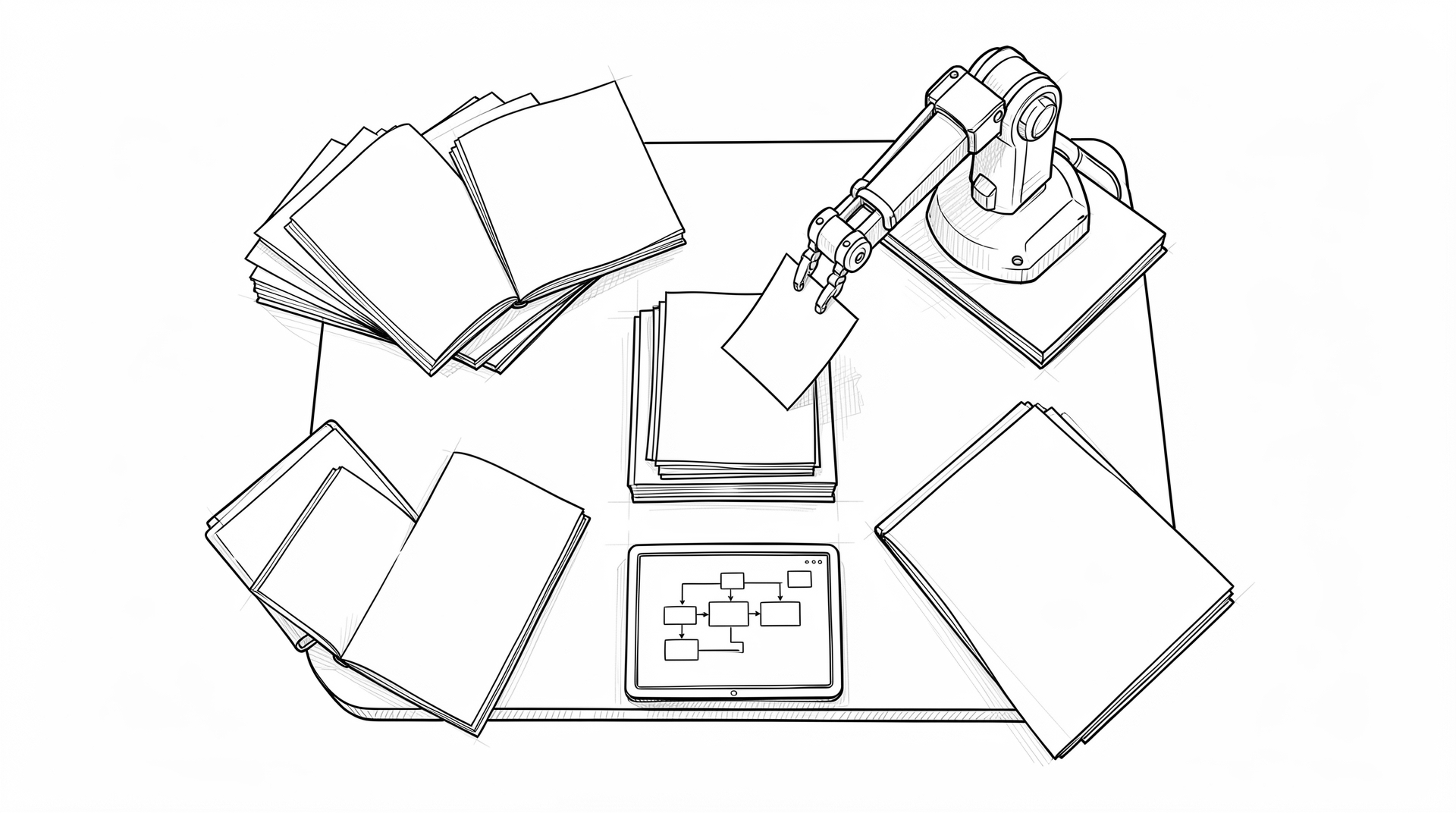
Large language models do something remarkably similar. They encounter, across training, a vast existing body of language and thought. They recombine patterns drawn from that corpus. Described that plainly, the process isn't just similar to what Shakespeare did — it's structurally the same act. So perhaps the uncomfortable truth about generative AI isn't that it steals.
It's that we have always been thieves — we simply didn't have the machinery to do it at scale before now.
But that can't be the whole answer, because if recombination alone were the crime — or the virtue — Shakespeare and an afternoon of AI slop would be morally identical, and they plainly aren't. The difference was never whether you borrowed. Of course you borrowed; everyone does, everyone always has. The difference is what happened after. Shakespeare didn't just have access to Holinshed and Plutarch and a shelf of Italian novellas — he had to decide, line by line, what stayed and what got cut, what got sharpened and what got thrown out entirely, and he staked his name on every one of those decisions being right. That selection was the labour. It still is. Midjourney reproducing Yoda on command isn't proof that recombination is theft — and a magazine crediting a person who never existed isn't proof that AI can't write. Both are proof of the same missing step: nobody, anywhere in either example, did the one thing Shakespeare couldn't skip — deciding what was worth keeping, and putting a real name on the decision. The slop is what recombination looks like with the judgment removed.
Shakespeare is what it looks like when the judgment is the entire point.
That's the actual differentiator now, and it cuts both ways for anyone using these tools. The machine will hand you recombination instantly and without asking whether any of it is good. Whether the result is closer to Shakespeare or closer to slop depends entirely on whether a person is still doing the one job the machine can't do for itself: choosing. What to keep. What to throw away. What's worth the risk of putting your name on. Used well, human judgment paired with a machine that can generate a hundred options before lunch produces something better than either would alone — but "used well" is exactly as hard as it's always been. You still have to be good — Shakespeare-level good — at knowing what to select. The machine has no opinion on that.
We've always been thieves. We just gave the thief a machine. Whether it's still a wonderful one is entirely up to whoever's taste is steering it.